

Project Details
Client:
NET 1 POWER Srl
Location:
Neptune (Rome)
Project date:
2023
Sectors:
Related service:
Amount:
nd
State of activity:
Procedure in progress at MASE

Project Details
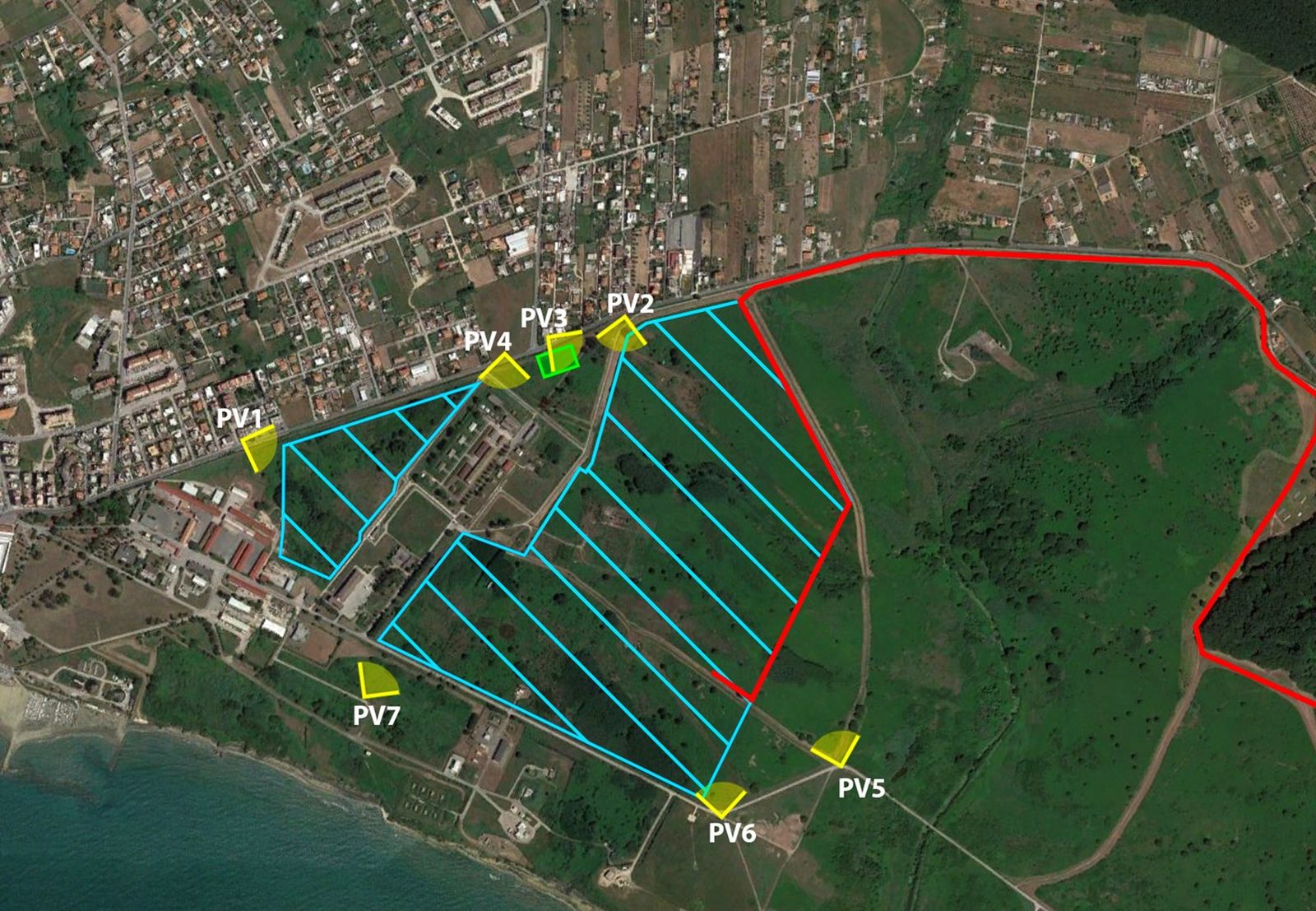
The project involves the construction of a photovoltaic system with a total power of 40,322MWp, falling within the LAZIO Region, in the Province of Rome, in the territory of Nettuno (Rome). The total cadastral area of the available areas is 982,534 m2, while that actually used for the construction of the system is 550,750 m2. The VDP conducted the following studies:
STUDY SPECIFICITY
The following environmental components were examined under the SIA: atmosphere, surface and groundwater, geology, land and agri-food heritage, biodiversity, landscape, noise, vibration and public health. During the construction phase, no significant impacts on the Atmosphere component are evident. In fact, from the analyses carried out, which estimated the dust emission during excavation activities for laying the underground cable, an overall PM10 emission figure of 74g/h was found, a value much lower than the limit value for work lasting between 200 and 250 days, equal to 158g/h. Regarding the component “Geology”, the potential impacts in the construction phase, are essentially attributable to the following aspects:
Regarding the potential alteration of surface and underground water bodies, prevention and mitigation actions have been indicated, such as the implementation of a closed system for collecting water from the construction site’s yards.